Polished floors · 5 August 2024
Polished concrete in retail and hospitality
A shop or dining room asks a polished slab to work after closing as well as in the photograph. This piece covers chair scrape, wine and oil, trading hours, acoustics, night cleaning, heritage fitouts, and the moments when vinyl or timber is the kinder floor.
By Sophie Walsh, Architecture editor · Updated 30 September 2025
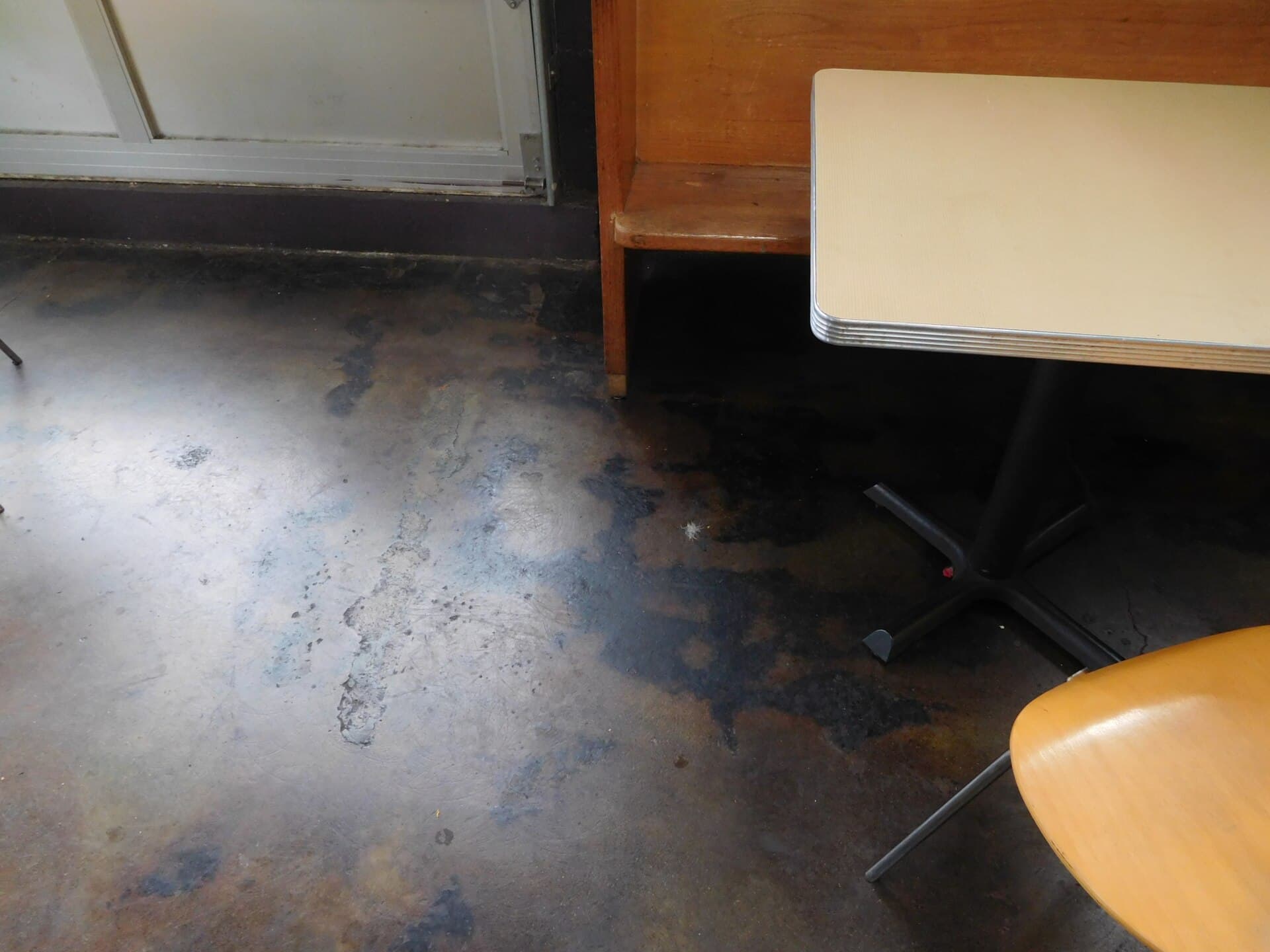
Hospitality and retail have made polished concrete a default interior in Australian cities: the converted warehouse, the corner cafe on a ground slab, the clothing shop that wants the building to show. The look travels well in photographs. The use is more specific. Chairs scrape. Wine finds a joint. Oil walks out of a kitchen. Cleaners arrive after midnight with a machine that was specified for a supermarket, not for your sheen.
A house floor can forgive a soft week. A trading floor cannot. The specification has to include the hours the public is not there.
A floor that works after 10pm
The useful test is not the opening-night photograph. It is the Tuesday close: chairs up, a film of sugar and dust, a wet run from the dishwasher, a delivery trolley that cut the corner again. If the floor still looks like the brief after that Tuesday, the polish was specified as an operation. If it looks tired in six weeks, it was specified as a mood.
Australian examples are everywhere as types, and that is the honest way to talk about them. Inner-suburban cafes on old shop slabs. Coastal kiosks with sandy thresholds. Wine bars in former light-industrial rooms. Regional bakeries that open before the street is swept. Department-store concessions that last eighteen months. None of these need a invented venue name. They need a floor that matches the dirt they actually import.
The house-floor piece is still relevant. Exposure, joints and sample grinds do not change because the ABN is different. The loads do.
Wear: chairs, heels, deliveries
Chair scrape is the hospitality mark. Metal feet, or timber feet with grit in the grain, draw pale arcs on a cream gloss. A salt-and-pepper hone hides those arcs longer. Felt pads are not optional furniture jewellery. They are consumables, like coffee filters, and someone has to replace them.
Heels and ferrules concentrate load. A densified floor takes that better than a soft topical. It will still show a point load as a shine or a bruise if the paste was weak. Changing rooms, till lines and the pass in front of a coffee machine are traffic diagrams. Walk them before you lock a cream finish through the whole tenancy.
Deliveries are a different abrasion. Trolleys, kegs, crate corners, the weekly produce run through a back door that was never detailed as an entrance. A transition strip, a sacrificial mat, or a change of finish in the back-of-house is cheaper than re-polishing the dining room because the potato box takes the same path as the guests.
Wine, oil and the stain that photographs
Dining rooms spill. The question is not whether, but how fast the floor is expected to forgive.
Wine, citrus, tomato and vinegar are acidic. On a densified surface they should be lifted, then washed. Left overnight they can etch a faint map that only shows in the afternoon light. Kitchen oil is slower and more persistent. It darkens paste. A guard helps. Prompt degreasing helps more. A cream floor in a fryer-heavy room is an optimistic specification.
Retail has its own chemistry. Cosmetic testers, bike-shop grease, florist water, the oily dust of a food hall. Specify the stock, not a generic “commercial”. A bookshop and a dumpling slot are not the same tenancy.
None of this requires a brand of sealer in the sentence. It requires a densified paste, an optional sacrificial guard, and a cleaning cupboard that matches the menu.
Hours of operation
A floor that can only be maintained in daylight is a problem for a business that trades into the evening. Grinding and major re-guarding are noisy, dusty, and incompatible with service. They belong in a shutdown, or in the hours after close if the tenancy and the neighbours will wear it.
Write access into the contract. How many nights. Whether the shopfront can be sealed. Whether food must be covered or removed. A hospitality polish that assumes weekend-day access to an inner-city cafe is a polish that will be rushed or postponed until the floor looks like a compromise.
Trading hours also decide the cleaning machine. A small mop-and-bucket close is a different abrasion from a nightly auto-scrubber. The pad and the chemistry have to match the sheen you chose. A gloss that is burnished every night will creep. A hone that is scrubbed with the wrong pad will gloss in lanes and stay matte under the banquettes.
Sound in a hard room
Polished concrete is loud in a room that is already hard: glass shopfront, plasterboard, timber furniture with no textile, a coffee grinder, a playlist. Conversation lifts. Staff lose their voices. Guests on a first date lean in and still miss the line.
This is not a reason to abandon the slab. It is a reason to treat acoustics as part of the fitout. Soft banquettes, a textile ceiling, a full bookcase, a change of floor in the dining zone, even a runner at the till — these are architectural decisions, not apologies. A wine bar in a former workshop can keep the slab and still be habitable if the rest of the room is not trying to be a gallery.
If the brief is a hard, bright, reverberant shop on purpose, say so. Do not discover it at the first Friday service.
Night cleaning
Night cleaning is where hospitality floors are won or lost. The closer needs a written method: dust first, then a pH-neutral wash, then a targeted degrease at the pass, then a rinse. The machine needs a pad that does not polish a hone into something else. The bucket needs nothing from the supermarket aisle that promises sparkle.
Grit from the street is the abrasive. Mats at the door, a grate if the entry is sandy, and a refusal to dry-sweep a dusty close will protect the floor more than a yearly “re-seal” sold in a panic.
Densifiers and guards set how much time you have when something spills at 9pm. They do not replace the close. A maintenance-free claim on a cafe floor is a claim against the closer’s job. It should not survive the first briefing.
Heritage and the former workshop
Many of the best Australian retail floors were not poured for retail. They were workshops, filling-station bays, light-industrial rooms, nineteenth-century shophouses with a later slab, 1960s commercial ground floors. Polishing them is a form of editing. You keep the joint pattern, the oil ghost that will not quite leave, the patch of different concrete where a machine sat.
That honesty is the attraction. It is also the limit. A heritage interior — whether listed or simply old — may not tolerate a deep aggregate expose if cover is unknown. It may not tolerate a high-alkaline strip. It may include terrazzo, timber margins or tiles that should stay, with the polish stopping at a clear junction.
Do a sample in an unloved corner. Record what the grind releases: smell, colour, softness. Old oil can bleed for years after you thought the floor was clean. Design for that shadow rather than promising a gallery white.
Council and landlord conditions belong in the same conversation as grit. Dust, hours, and whether the slab is the landlord’s finish or the tenant’s all change what you can cut.
When vinyl or timber is kinder
Concrete is not a moral good. There are tenancies that treat people better with another floor.
Vinyl — a commercial sheet with a welded joint, not a cheap plank — is kinder when the room is wet, when the close must be fast and chemical, when the slab is too uneven to grind without a topping you cannot afford, or when the lease is short and the exit must be clean. It is also kinder to staff knees and to the acoustic of a small, bright cafe that cannot afford a textile ceiling.
Timber is kinder when the room needs warmth and quiet, when the brand is domestic rather than industrial, and when the operator can live with a recoating cycle. A wine room that wants evening conversation may be better on timber over a well-detailed slab than on a hone that photographs cold.
There are also rooms that should stay as they are: an existing terrazzo, a good quarry tile, a boarded floor that is the building. Polishing the slab next door and butting the two with a cheap angle is not a heritage strategy.
Kindness, here, is operational. If the floor cannot be maintained in the hours you actually have, or cannot be replaced when the use changes, it is not a serious hospitality finish, however calm it looks at 11am.
Specifying for a fitout, not a photograph
Write the use: covers per night, kitchen type, door from the street, delivery path, close-out method, lease length. Then write the floor: existing slab or new pour, exposure, sheen, densifier, guard, sample, edge work, and a maintenance note the closer can follow at 11pm.
A polished slab can be an excellent retail and hospitality floor in Australia. It already is, in hundreds of unnamed rooms that simply work. It fails when it is asked only to look like those rooms, without inheriting their joints, their night, or their mop.
Questions this piece answers
Will dining chairs wreck a polished cafe floor?
They will mark it. Felt pads, a honed or low-satin sheen, and a salt-and-pepper exposure hide that wear better than a cream gloss. Chair scrape is a fitout problem as much as a floor problem. Budget for pads and for a maintenance lane in front of the pass.
Can polished concrete handle wine and kitchen oil?
A densified floor gives you time. It is not a glass benchtop. Lift spills, use a pH-neutral wash, and keep a degreaser for the pass that is rinsed off, not left to sit. Deep oil that has time to travel into an open paste will shadow.
When should a hospitality fitout choose timber or vinyl instead?
When the room needs quiet, when the slab is too uneven or too shallow to grind honestly, when the use is wetter than a mop can manage, or when the operator needs a floor that can be replaced in a weekend. Kindness here is acoustic, operational and reversible.
Keep reading in this hub
- In-slab heating under polished floors
Heating a slab and then polishing it is one system, not two trades who meet at handover. This piece compares hydronic and electric, cover to pipes, thermal mass from Hobart to Brisbane, cracking risk, when to polish, energy honesty, and the rugs that undo the heat.
- Grinding, densifiers and the maintenance myth
Polished concrete is sold as maintenance-free more often than it is explained. This piece covers what grinding does, how lithium and sodium densifiers work in principle, silica dust, pH-neutral cleaning, re-guarding, edge work and the patchy slabs that no chemistry will even out.
- Honed versus polished — choosing a sheen
Sheen on a concrete floor is a grit sequence, not a catalogue finish. This piece sets honed matte against gloss, and deals with north-glass glare, slip, trowel marks, densifiers versus topical guards, and the way maintenance quietly raises the shine you thought you had locked.