Polished floors · 29 October 2024
In-slab heating under polished floors
Heating a slab and then polishing it is one system, not two trades who meet at handover. This piece compares hydronic and electric, cover to pipes, thermal mass from Hobart to Brisbane, cracking risk, when to polish, energy honesty, and the rugs that undo the heat.
By Priya Raman, Outdoor living editor · Updated 11 February 2026
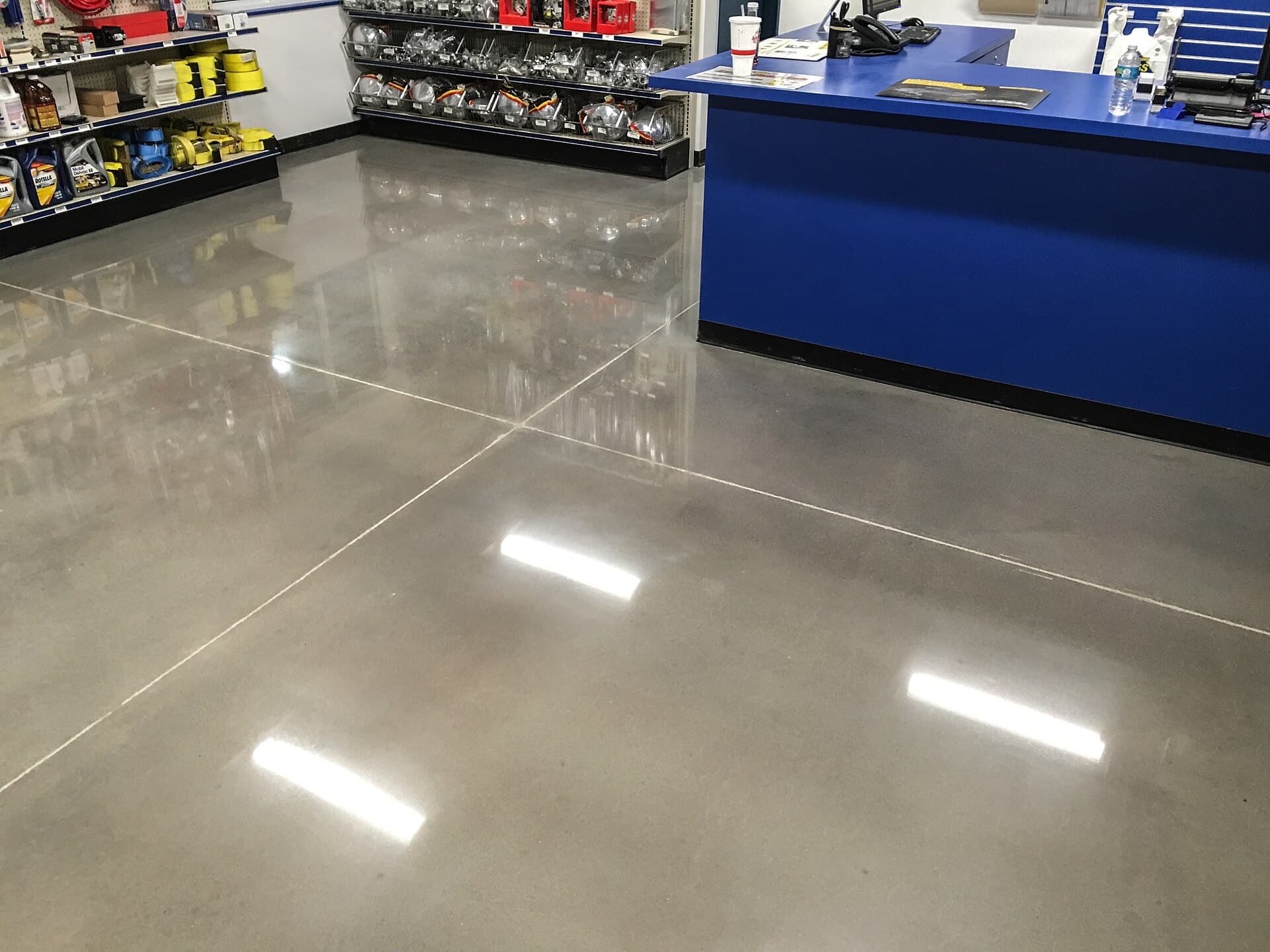
A polished floor is a large thermal object. In a cold Australian house that can be an advantage: the slab holds heat and returns it slowly. In a hot house it can be a liability you walk on. In-slab heating is the attempt to make that mass deliberate — to warm the thing you have already decided to look at.
It only works if the heating and the polish are designed as one sequence. Cover, joints, curing, first heat and first grind all lean on each other. Two separate quotations stapled together are how pipes get too close to a diamond, and how a beautiful hone sits on a slab that was cracked by an impatient boiler.
Heat in the mass
Concrete stores heat. That is not a slogan. It is a property you can feel on a January night in a shaded Brisbane room, or on a July morning in Hobart when the air has been warmed and the floor has not. Polished house floors already ask you to live with that mass. Heating asks you to charge it on purpose.
The finish matters less than people think. A hone and a polish have almost the same thermal behaviour. Rugs, furniture and insulation under the slab matter more. So does the climate the house is actually in, not the climate the photograph was taken in.
Hydronic and electric
Hydronic systems run water through pipes cast into the slab, usually as a grid tied back to a manifold. The heat source may be a heat pump, a boiler, or a combination with solar. The floor is a large, low-temperature radiator. Response is slow. Distribution can be even if the loops are designed, and the running cost reasonable if the house is insulated.
Electric systems embed cables or mats. They are simpler to zone, often cheaper to install in a single room, and more expensive to run if they become the primary heat for a large, leaky house. Controls can be local and the builder’s coordination is lighter.
For a whole-house polished slab in a cold climate, hydronic is the more serious partner. For a bathroom, a studio, or a retrofit that cannot take a manifold, electric can be the honest smaller tool. Choose on the size of the slab, the tariff, and whether anyone has insulated the underside — not on a brochure of bare feet on a glowing grey field. Both systems fail in the same ways: too little cover, too little insulation, too much glass, too much rug.
Cover to pipes and the grind allowance
This is the detail that decides whether the floor can be polished at all.
Pipes and cables need concrete above them — cover — for structure, fire and the simple fact of a grind. A cream finish removes little. A salt-and-pepper cut removes more. An aggregate expose removes a lot. If the heating was laid to a minimum structural cover and the client later wants a deep reveal, the diamonds and the circuit are in the same conversation.
Agree the target exposure before the pipes are tied. Add a grind allowance on top of the cover the heating designer wants. Mark the loops. Photograph them. Keep an as-built drawing in the house file, not only in a contractor’s phone. A polisher who cannot see the grid will treat the slab as empty mass. That is how a “light cut” becomes a repair.
Edges and stairs remain awkward. Heating often stops short of a threshold. The polish will not. Temperature and colour can change where the grid ends. Detail that line, or accept it as a faint weather on the floor.
Hobart winters, Brisbane summers
Thermal mass is not equally useful across the country.
In Hobart, nipaluna, and in the colder inland south, a heated polished slab in an insulated, well-glazed house can be a primary comfort system. The mass takes the night. The sun, if you have north glass with winter access, charges the same object. Bare feet make sense. The energy question is whether the envelope deserves the plant.
In Melbourne, Adelaide and the tablelands the same logic holds for much of winter, with a longer shoulder where you may not need the heat every day. A system that only knows “on” will overshoot a mild August.
In Brisbane, Meanjin, and through much of the coastal north, winter heating is a brief conversation. A polished slab already stays cool if the house is shaded and night-purged. Adding heat can be justified in a bathroom or a south room that never sees winter sun. Heating the whole ground floor as if the house were Tasmanian is how you pay to fight the climate you chose. Perth and the west have their own split — cool winters, hot afternoons. One specification will not travel.
Cracking risk
Heating does not automatically crack a slab. Bad heating does. So does a slab that was going to crack anyway.
The risks are ordinary and cumulative. Pipes too close to the surface, or bunched. First heat applied while the concrete is still wet. Large, sudden temperature steps. Joints that ignore the grid. A mix that was already shrinking hard because nobody cured it through heat, wind or a cold snap. A polish that cuts a section thin over a loop.
Mitigations are also ordinary. A mix designed for the pour, not only for a pretty paste. Curing that actually happens. Joints drawn with both the architecture and the loops. Insulation under the slab so the heat goes into the room, not the ground. Commissioning that raises temperature over days, not an afternoon. A polisher who knows the cover.
Hairline shrinkage cracks will still appear. They appear in unheated slabs. Heating makes them easier to moralise. Measure, do not mythologise. A structural crack that opens with heat is a design or construction failure. A map of fine paste cracks is often the slab being a slab.
When to polish
Not the week after the pour. Not the morning after first heat.
The slab needs to have gained strength, dried enough for the grind you intend, and, ideally, to have been commissioned so that any early movement has already happened. Exact timing depends on thickness, weather and the mix. The principle is patience. Diamonds on a green, warm slab are a way to polish a crack pattern you have just encouraged.
If the heating contractor and the polisher do not share a programme, write one. Pour. Cure. Dry. First heat, slowly. Cool. Sample grind. Full grind, densify, hone or polish. Then protect the floor from the trades who will treat it as a bench.
A retrofit polish on a slab that has been heated for years is simpler in sequence and harder in archaeology. You inherit whatever cover exists. The sample grind is non-negotiable.
Energy honesty
A heated polished floor is not free heat. It is a delivery system. If the house leaks, if the underside of the slab is open to a cold void, if the glass is a wall of winter sky, you will warm a beautiful surface and still be cold. The plant will run. The bill will explain the architecture.
Heat pumps make hydronic systems more defensible than they were when the only story was a gas boiler. They do not exempt you from insulation, from shading, or from the question of whether a large slab in Brisbane should be a heater at all.
Electric in-slab on a peak tariff, used as whole-house heat, is rarely an honest comfort strategy. Electric as a bathroom or a study, on a timer, in a house that is otherwise passive, can be.
Write the expected use: which rooms, which months, whether the slab is allowed to rest. A system designed for “the floor is always 22” in a leaky pavilion is a different object from a Tasmanian house that charges in the afternoon and lets go till morning.
Rugs
Rugs are the quiet sabotage of in-slab heat. A thick wool, a rubber underlay, a full-room covering — these insulate the room from the mass you have paid to warm. You will have a hot slab and cool ankles, and you will turn the thermostat up.
If the room needs softness for acoustics or for a child, use smaller rugs with a breathable underlay, and leave the main field open. Furniture with solid plinths has a similar effect at a smaller scale. A kitchen island is a shadow on the heat map. Design for it.
A household that wants wall-to-wall softness should not be sold a heated polish. They should be sold a heated slab with a covering, or a different heating system. The polished floors brief includes knowing when the polish is not the point.
One sequence, two trades
Bring the heating designer, the concreter and the polisher into the same drawing. Cover, loops, joints, exposure, first heat, first grind. If that meeting cannot happen, the floor can still be poured. It just cannot be promised.
In-slab heating under a polished Australian floor is at its best when it is slightly boring: adequate cover, slow commissioning, a climate that actually wants the heat, a hone you can walk on in July, and a rug that knows its place. It is at its worst when it is sold as a glowing photograph with no underside, no programme and no winter.
Questions this piece answers
Can you polish a slab that has in-slab heating?
Yes, if cover to the pipes or cables was designed for the grind, the heating has been commissioned without shocking the slab, and the polisher knows where the circuits run. A sample grind still comes first. Guessing cover from a brochure is how pipes get scored.
Is hydronic or electric better under a polished floor?
Hydronic suits larger, well-insulated slabs and pairs naturally with a heat pump. Electric suits small rooms, retrofits and simpler controls, at a higher running cost if it becomes the main heat. Neither is a finish. Both need cover, joints and a commissioning plan.
Will rugs stop the heating working?
Thick rugs and rubber underlays insulate the slab from the room. You will heat the mass and not the feet. Use rugs as small, breathable islands if you need them for acoustics, and leave the main field clear. A heated polished floor and a fully carpeted living room are different briefs.
Keep reading in this hub
- Polished concrete in retail and hospitality
A shop or dining room asks a polished slab to work after closing as well as in the photograph. This piece covers chair scrape, wine and oil, trading hours, acoustics, night cleaning, heritage fitouts, and the moments when vinyl or timber is the kinder floor.
- Grinding, densifiers and the maintenance myth
Polished concrete is sold as maintenance-free more often than it is explained. This piece covers what grinding does, how lithium and sodium densifiers work in principle, silica dust, pH-neutral cleaning, re-guarding, edge work and the patchy slabs that no chemistry will even out.
- Honed versus polished — choosing a sheen
Sheen on a concrete floor is a grit sequence, not a catalogue finish. This piece sets honed matte against gloss, and deals with north-glass glare, slip, trowel marks, densifiers versus topical guards, and the way maintenance quietly raises the shine you thought you had locked.