Polished floors · 22 January 2024
Polished concrete floors for Australian houses
A house slab can be a finished floor if you decide, before anyone trowels, whether you are polishing a new pour or grinding what a builder left. This piece covers exposure, joints, dogs, rugs, seasonal comfort and the sample grind that should happen before you commit a living room.
By Elise Hart, Editor · Updated 8 April 2026
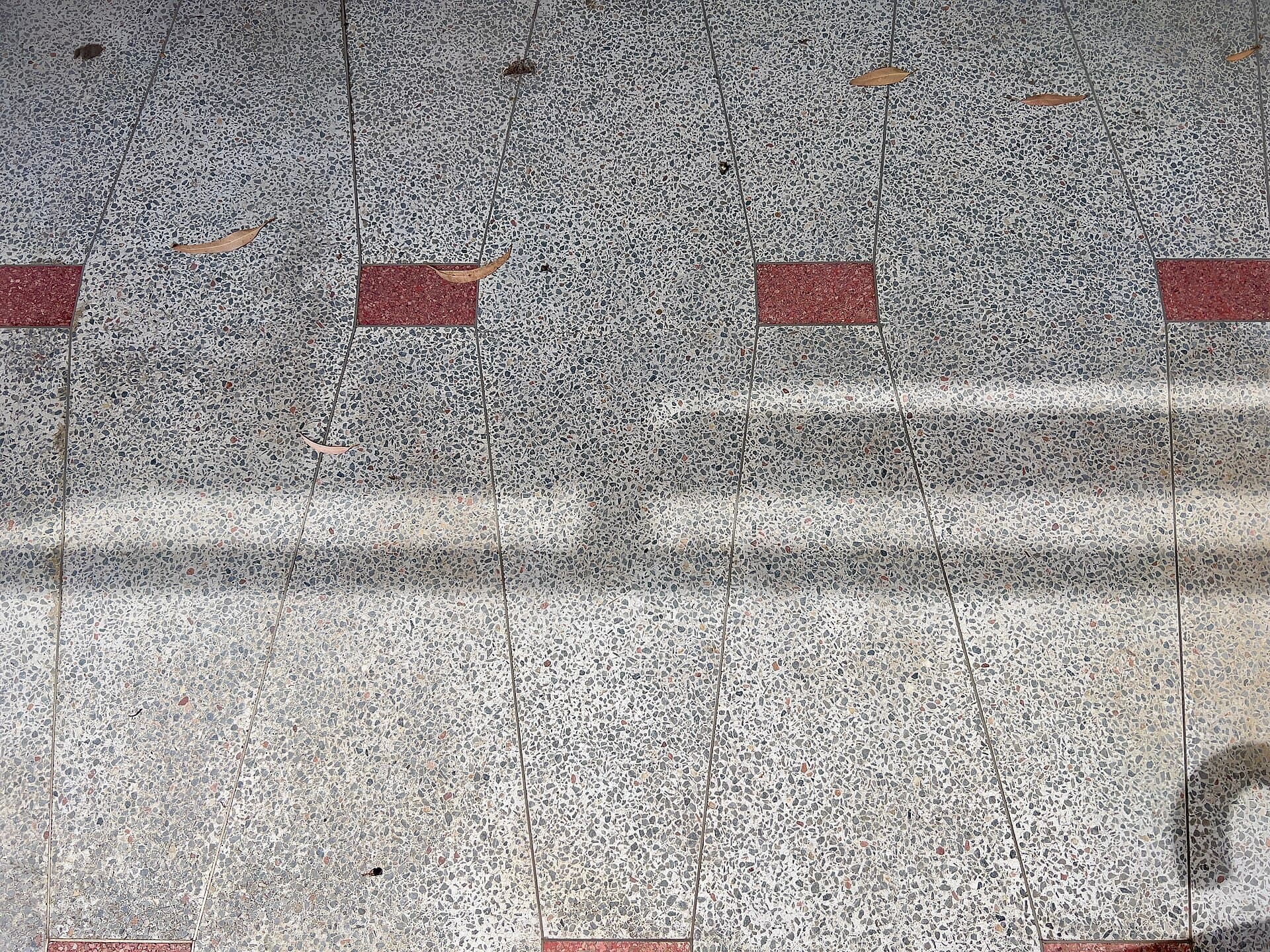
A polished floor in an Australian house is not a product rolled off a truck. It is a decision about how much of the slab you are prepared to live with, and how much of it was ever designed to be seen. Builders still hand over living rooms with a note that the concrete is “to be finished later”. Later is when the arguments start: cream or salt-and-pepper, rugs or bare, dogs, winter feet, the saw cuts that will never disappear.
The work belongs in the polished floors conversation rather than in a flooring catalogue. You are not choosing a plank. You are choosing a depth of grind through a particular mix, poured on a particular day, by a particular crew. Two jobs get sold under the same name — a new pour specified for polish, or a grind of whatever is already there — and they should not share a price or a promise.
New pour or grind what is already there
A new pour can be designed as a face. Mix design, slump, finishing and curing are then part of the architecture, not leftovers. An existing slab is archaeology. You reveal what was batched for structure, speed or a floor covering that never arrived.
What a new pour can control
If the slab is still in the drawings, you can ask for a mix that will take a polish: a well-graded aggregate you are willing to see, a paste that is not starved, a slump the finishers can actually work, and curing that is not a hose on Friday afternoon. Integral colour belongs in the truck, not in a later stain. Joints belong on the plan. Cover belongs in the same conversation: cream needs less depth; salt-and-pepper or an aggregate expose needs enough paste and stone above the steel that a grind does not become a structural argument.
What an existing slab will show
Existing house slabs were often power-trowelled for a vinyl or carpet that was never laid, or laid and later ripped up. You may find curing compound, plaster droppings, construction adhesive, paint overspray, and a hardness that changes from the garage door to the kitchen. Some of that can be ground off. Some of it has already marked the paste.
A 1960s office floor, like the Mascot slab on this article, can polish into a genuine interior because the original finishers were aiming at a hard, dense surface. A 1990s waffle pod with a thin, overworked cream is a different object. No grit sequence invents a terrazzo that was never batched. If the existing slab is the job, the sample grind is the specification, not a sales courtesy.
Cream, salt-and-pepper, and exposed aggregate
These names describe how far the grind goes, not three products.
Cream is a light cut. You stay in the cement paste. The floor can look quiet, almost like a large tile, if the trowel work was even. It also shows every burn mark, every cold joint, and every place the finisher leaned harder.
Salt-and-pepper is a deeper cut. Fine aggregate reads as a sprinkle of sand and small stone. The floor hides daily scuffs better than cream, which is why most family houses that are still happy after five years sit in this range. The sprinkle will be the sand that was in your mix, not a catalogue blend.
Exposed aggregate is a different brief. You are cutting to the coarse stone. That can be handsome if the stone was chosen and the cover is honest, or a loud, pitted field if driveway gravel is asked to be a living room. Confirm cover to reinforcement before anyone promises a terrazzo look from a structural pour.
The choice of sheen sits on top of this decision. A cream floor taken to a high gloss will show trowel work and north-glass glare. A salt-and-pepper floor taken only to a hone is often the more liveable house finish.
Joints you will live with
Polishing does not remove joints. It makes them clearer.
Saw cuts, isolation joints at walls and columns, construction joints where the pour stopped — all of them remain. In a house they become the lines your eye follows from the kitchen to the dining table. Fillers can tone them down. They cannot pretend the slab is seamless.
Ask for the joint plan before the pour, or walk an existing slab with masking tape and decide which lines you can accept mid-room. Align control joints with walls, island benches and door centres where possible. Moving a dining table 400 millimetres is cheaper than arguing with a saw cut after the furniture arrives.
Rugs, rooms and the sound of a hard floor
A polished house without soft surfaces is a loud house. Hard soles, dropped cutlery, a washing machine two rooms away — concrete transmits that energy. Rugs are not a failure of the finish. Place them where people sit. Leave traffic paths bare if you want the slab to read. Avoid rubber-backed mats that can stain paste; use a breathable underlay and lift rugs when you wash.
Soft furnishings, bookshelves and timber joinery will do more for sound than any sealer. If the brief is glass, polished concrete and little else, say so early. The floor is not the only hard surface in that sentence.
Winter feet and summer mass
Concrete is thermally massive. That is the point of a slab, and the reason bare feet complain in July.
In Melbourne, Hobart, Canberra and the colder tablelands, a polished floor without in-slab heat or a serious rug strategy will feel cold on winter mornings. The room may be warm while the slab still holds last night. In-slab heating changes that, at a cost that belongs before the pour, not after the polish.
In Brisbane, the coastal north and much of the west, the same mass can be an advantage if the house is shaded and night-purged. It will not stay cool behind unshaded glass. Seasonal comfort is a house problem the floor makes visible. Do not ask a polish to correct a glazed box.
Dogs, claws and the honest wear pattern
Dogs do not ruin a well-densified floor. They wear it in a particular way. Nails polish a path from the back door to the water bowl. Wet coats bring grit. Urine left on paste is chemistry: rinse it, do not perfume it with an acid cleaner. A honed salt-and-pepper hides claw traffic better than a cream gloss. If the household includes a large dog and a pale cream fantasy, believe the dog. Dragged dining chairs will mark any hard floor; felt pads are part of the specification.
What builders leave behind
The phrase “left ready for polish” is doing a lot of work on Australian sites. Ready often means:
- a power-trowelled surface with burn marks and a skin that the first metal bond has to cut through
- curing compound that was never meant to be a finished face
- plaster, paint and adhesive that have already stained the paste
- an uneven slab that will telegraph as waves under a raking light
- edges and stairs that a ride-on grinder cannot reach
None of this is a moral failure. It is what happens when the structural crew and the finishing crew are not the same contract. Price the rectification. Do not pretend a single 80-grit pass will make a living room out of a builder’s platform.
The sample grind
Do a sample on the actual slab, in the actual light, at the exposure you think you want. A cupboard corner is better than nothing. A square metre in the living room is better still. Run the intended grit sequence, densifier and any guard. Look at it morning and afternoon, wet and dry. If you hate it, you have spent a small amount of money. If you love it, you have a hold point. The sample will also tell you whether you can stay at cream, or whether patchiness will force you deeper.
Specifying without theatre
Write the brief as a sequence, not a look. New pour or existing slab. Target exposure. Joint plan. Sheen. Densifier and guard. Sample location and acceptance. Protection after the grind, because the next trade will treat a finished floor as a workbench if you let them.
Then live with the honesty of the material. Polished concrete in a house is at its best when it is treated as the slab it is: jointed, massive, slightly imperfect, and able to take a long life of school bags and summer dust if you do not ask it to impersonate a showroom tile.
Questions this piece answers
Can any existing house slab be polished?
Many can be ground and densified, but not every slab should be sold as a decorative floor. Soft paste, heavy trowel burn, paint, adhesive and shallow cover over reinforcement all limit what a polish can honestly show. A sample grind is the only reliable test.
Is cream, salt-and-pepper or exposed aggregate better for a family house?
Cream is quieter and cheaper to produce if the paste is even. Salt-and-pepper hides daily wear better. A deep aggregate expose is a different floor entirely and needs a mix and cover depth that were planned for it. Choose from a sample in your light, not from a catalogue photograph.
Will polished concrete be cold in winter?
The slab is thermally massive. Bare feet feel that mass on a July morning in Melbourne or Hobart unless the floor is heated or you accept rugs in the rooms you sit in. In summer the same mass is often an advantage if the house is shaded and night-purged.
Keep reading in this hub
- In-slab heating under polished floors
Heating a slab and then polishing it is one system, not two trades who meet at handover. This piece compares hydronic and electric, cover to pipes, thermal mass from Hobart to Brisbane, cracking risk, when to polish, energy honesty, and the rugs that undo the heat.
- Polished concrete in retail and hospitality
A shop or dining room asks a polished slab to work after closing as well as in the photograph. This piece covers chair scrape, wine and oil, trading hours, acoustics, night cleaning, heritage fitouts, and the moments when vinyl or timber is the kinder floor.
- Grinding, densifiers and the maintenance myth
Polished concrete is sold as maintenance-free more often than it is explained. This piece covers what grinding does, how lithium and sodium densifiers work in principle, silica dust, pH-neutral cleaning, re-guarding, edge work and the patchy slabs that no chemistry will even out.