Decorative concrete · 9 July 2024
Stencil and overlay systems for tired slabs
An overlay is honest when the host slab can still carry load and moisture. This article explains bond, polymer overlays versus microtoppings, stencil colour, why movement joints must continue through the new face, typical delamination and mapping cracks, and when the only kind repair is to rip the slab out.
By James Calder, Materials editor · Updated 4 October 2025
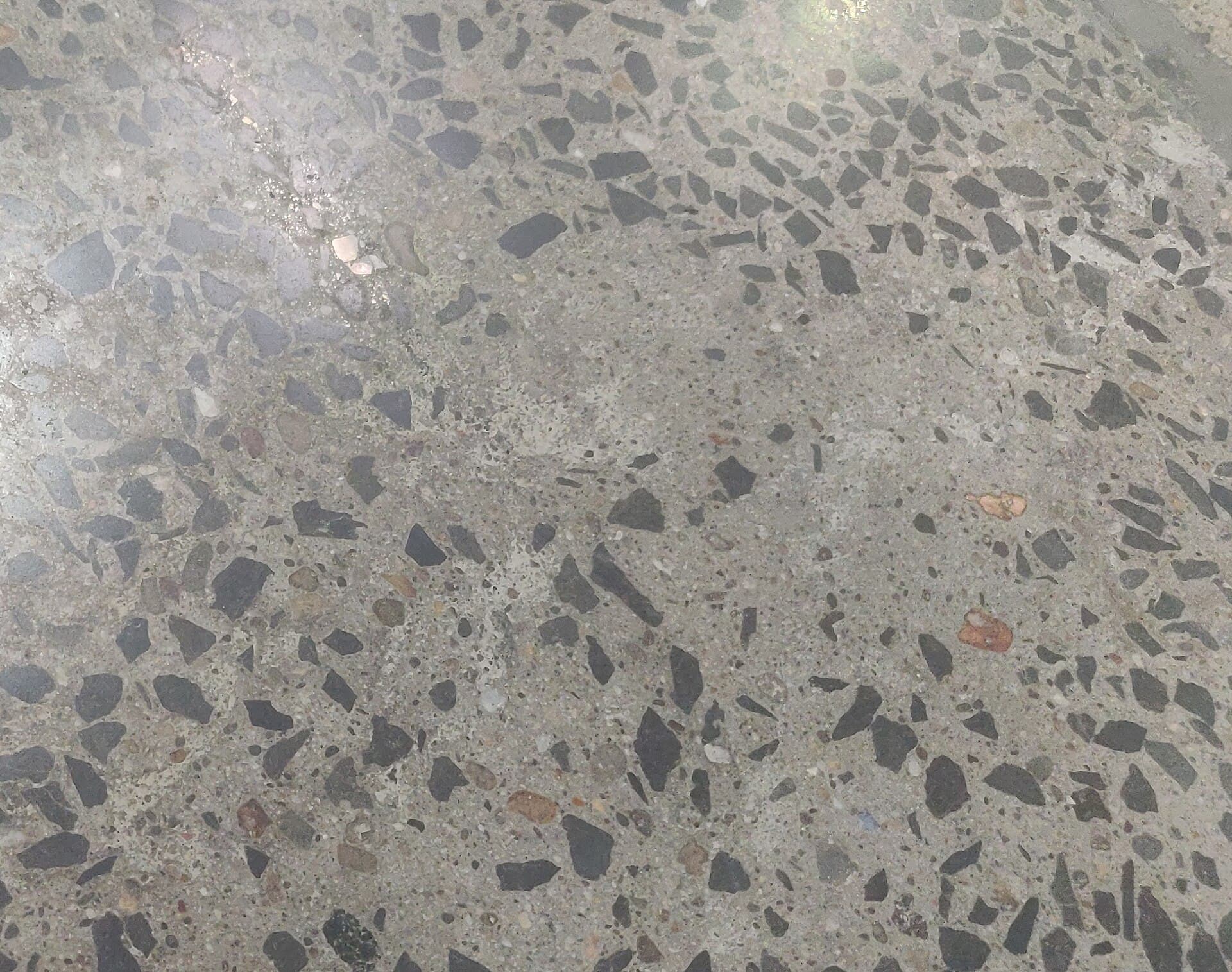
An overlay is a second chance offered to a slab that is still, in structural terms, a slab. That sentence is the whole ethics of the method. If the host can carry the load, drain and hold a bond, a polymer face or a microtopping can change the way the house meets the ground without a saw-cut funeral. If the host is tired in the bones — pumping at the joints, heaving on clay, saturated from a garden bed built against the edge — the overlay is a photograph glued to a failure. Australian suburbs are full of both outcomes. The useful skill is telling them apart before anyone opens a bag.
When an overlay is an honest offer
Honesty here is not a mood. It is a list.
The host should be sound enough that a pavement engineer, or a contractor taught to think like one, would not condemn it on thickness, reinforcement and support. AS 3600 does not exist to decorate a driveway, but the instincts it trains — cover, crack control, a concrete that is what the docket said — still apply to the thing you are about to coat. AS 3727.1, for a residential pavement, still wants falls, edge support and a base that is not theatre. An overlay does not add those. It inherits them.
The host should be cleanable. Oil from a generation of weekend mechanics, tyre dressing, the shadow of a leaking bin, a layer of failed acrylic — all are bond breakers. Some can be ground off. Some cannot. A solvent wipe that smells like work is not a surface that will take a polymer.
The host should be dimensionally the slab you think it is. A court that has already stepped at every joint on expansive clay in Melbourne’s west or Adelaide’s inner north will go on stepping. A thin overlay will step with it, or part from it. Either way the new face becomes a map of the old problem. If those tests are passed, an overlay is not a compromise. It is a way of keeping embodied concrete in place and changing only the wear layer.
A decorative skin is not a repair of the host. It is a new surface that will tell the truth about the old one.
Bond is moisture, profile and chemistry
Overlays fail at the interface. The popular language is “it didn’t stick”. The actual language is usually moisture, laitance, or a sealer that was never removed.
Moisture moving out of an old slab — from the ground, a garden irrigation line, a wet-season water table in coastal Queensland — will lift a polymer film or a thin topping as surely as it will lift a vinyl. The surface can look dry at 9 am and still be delivering vapour at noon. Look at the edges, the planters, the downpipe that discharges toward the slab. Then test. A plastic sheet taped down overnight is a crude screen; darkening under it is a warning, not a measurement. On a valuable job, measure.
Profile is the other half of bond. A steel-troweled interior slab, or an exterior slab still wearing glossy acrylic, offers the overlay nothing to key into. Mechanical preparation — grind, shot-blast, or an abrasive that removes the weak paste — is the work. Acid etching is still proposed on small jobs because it is cheap and looks like chemistry. It is a poor substitute for a profile you can feel, and it adds salts you then have to wash off.
Primers and polymer modifiers belong to a system, not to a generic glue. Mixing a primer from one bag with a topping from another, because both are “the grey one”, is how you get a delamination that announces itself at the first hot spell.
Polymer overlays and microtoppings are different thicknesses of risk
The trade uses these words loosely. It helps to keep them apart.
A polymer-modified overlay, typically several millimetres to a centimetre or more, is a genuine wearing surface. It can take a broadcast aggregate, a light stamp or a stencil. It has enough body to follow a gentle deviation in the host and, in principle, to be repaired as a bay. It still cannot bridge a working crack, and it cannot invent falls the host does not have.
A microtopping is a thin cementitious skin, often well under three millimetres, used to change colour and smoothness. Indoors, on a stable slab, it can be a quiet luxury. Outdoors in Australian UV and traffic it is a short story. It will map every discontinuity in the host, wear at the gate, and show a repair as a pale island. Specify it where you are only adjusting the face, not where you hope to hide a driveway’s history.
Stencil colour sits on top of either, and behaves like the topical and shake colours discussed in the journal’s coloured concrete and stamped and patterned pieces. The grout line is a dusting. UV fades the antique and the dye first. Traffic takes the highs. If the overlay is delaminating, more pigment is not a remedy.
The aesthetic question — whether a stencilled ashlar on a 1980s patio is a kindness or a costume — belongs with the argument about imitation stone and timber. The materials question is simpler: a stencil does not make a weak host strong.
Movement joints must continue, or they will continue anyway
This is the failure that looks like bad luck and is usually bad drawing.
The host slab already has joints: sawn, tooled, or the cracks that have become joints by use. Those planes are still moving with temperature, with moisture, with the clay. An overlay that runs across them as if they had been healed will crack on those exact lines. The new crack is often sharper than the old one, because the topping is brittle and thin. Clients call this “crazing” or “mapping”. The map is the old slab, showing through.
The correct sequence is dull and non-negotiable:
- Find every working joint and every crack that moves.
- Decide which cracks are to be treated as joints from now on.
- Prepare and overlay.
- Recut or reform those joints through the new face, to the host, before the overlay wants to tear itself.
- Seal the joints with a sealant that can move, not with leftover topping.
Infills, epoxy injections and “crack repair compounds” have a place on dead cracks. On a live joint they are a delay. The overlay should look like a pavement with joints, because that is what it is. A seamless photograph is a photograph of a future failure.
On clay sites the overlay conversation should probably stop here and become a pavement conversation. If the host is already stepping, you are not choosing a stencil pattern. You are choosing whether to engineer the ground.
How these systems actually fail
Delamination is the clean break: a hollow sound under a hammer, a blister in January, a sheet that lifts at a saw cut. Causes cluster — moisture from below, a sealer that was painted over, a primer that flashed off in 40-degree wind, a topping thicker in the low spots than the system can support. Once a hollow is the size of a dinner plate, cut back to sound bond and re-do the bay. Feathering over it is how the dinner plate becomes a platter.
Mapping cracks are the host speaking. They follow joints you buried, reinforcing lines, the edge of an old patch. They are not a reason to abandon overlays as a class. They are a reason to stop selling overlays as crack concealment.
Wear-through on a microtopping looks like a pale path from the car to the door. Recoating the whole surface is the kind option; a local touch-up is a spot. Colour fade on a stencil is the same UV physics as any dry shake. A penetrating sealer will not save a fugitive pigment. A film sealer will save the look for a while and then become the next failure layer. The materials-and-method habit of mind — mix, preparation, cure, sealer as a system — applies to retrofit work even more than to a new pour, because you have less thickness in which to hide a mistake.
When the only kind repair is to rip it out
There is a point at which kindness to the existing slab becomes unkindness to the household. The host is too thin for the cars it now takes. The base is wet and pumping. The surface is contaminated past any reasonable grind. Previous overlays are stacked like pastry. The falls run toward the house. The clay has stepped the bays beyond what a skin can follow.
In those cases a new pavement, detailed as a pavement, is the decorative choice as well as the structural one. You get to specify thickness, joints, stone or oxide, and a finish that can be repaired in kind. The waste of the old slab is real, and it should be weighed. It should not be used as an argument for another year of delamination.
A useful briefing question, before any bag is opened: if this overlay fails in three summers, what will we do then? If the answer is “rip it out anyway”, rip it out now. If the answer is “recoat a sound face”, you may have an honest overlay. The tired slab deserves that much clarity.
Questions this piece answers
Can an overlay hide cracks in the old slab?
It can hide them for a season. Hairline shrinkage may not telegraph immediately; structural and movement cracks will. Any joint that is still working in the host must be honoured in the overlay. Filling a moving crack and coating over it is how mapping cracks appear in the new face.
How do I know if the old slab is dry enough?
Moisture that is still leaving the host will break a polymer bond or blister a film. Test; do not guess from a dry-looking surface. A plastic-sheet test is a crude start. A measured moisture condition, plus a look at drainage, garden beds and a leaking pipe, is the actual investigation.
When should I rip the slab out instead?
When the host is structurally inadequate, pumping at joints, contaminated with oil that cannot be removed, or moving in ways an overlay cannot follow. A new pavement designed to AS 3727.1 on a prepared base is cheaper, over a decade, than a decorative skin that delaminates in the third summer.
Keep reading in this hub
- When concrete should not imitate stone or timber
Faux slate and printed timber ask concrete to impersonate a material it will outlast. This essay argues for honest grey and oxide in the lineage of Australian modernism, names when a stamp becomes kitsch, and sets out the few cases — access, heritage streetscape — where imitation still earns its keep.
- Exposed aggregate driveways that last in Australian sun
Seeded stone and integral aggregate age differently in Adelaide heat, Perth UV and Brisbane storms. This piece covers local basalt, granite and river pebble, surface retarders, wash timing, sealer and hot-tyre marks, and the drainage falls that AS 3727.1 expects of a residential pavement that will still look like stone in twenty years.
- Stamped and patterned concrete that earns its keep
Stamp mats, stencils and antique release can make a driveway look finished on day one and tired by year eight. This article covers joint layout versus pattern, repairability, slip under AS 4586, fading release colour, and the moment a suburban Australian stamp becomes a period piece rather than a finish.