Outdoor living · 3 June 2024
Pool surrounds — slip resistance, heat and salt
A pool surround has to take wet feet, midday heat and the chemistry of a salt-chlorinated pool without becoming a slip or a burn. Coping is not the same job as the deck. This piece translates wet-pendulum ratings into briefing language and compares broom, exposed and honed finishes.
By Tom Nguyen, Technical editor · Updated 7 January 2026
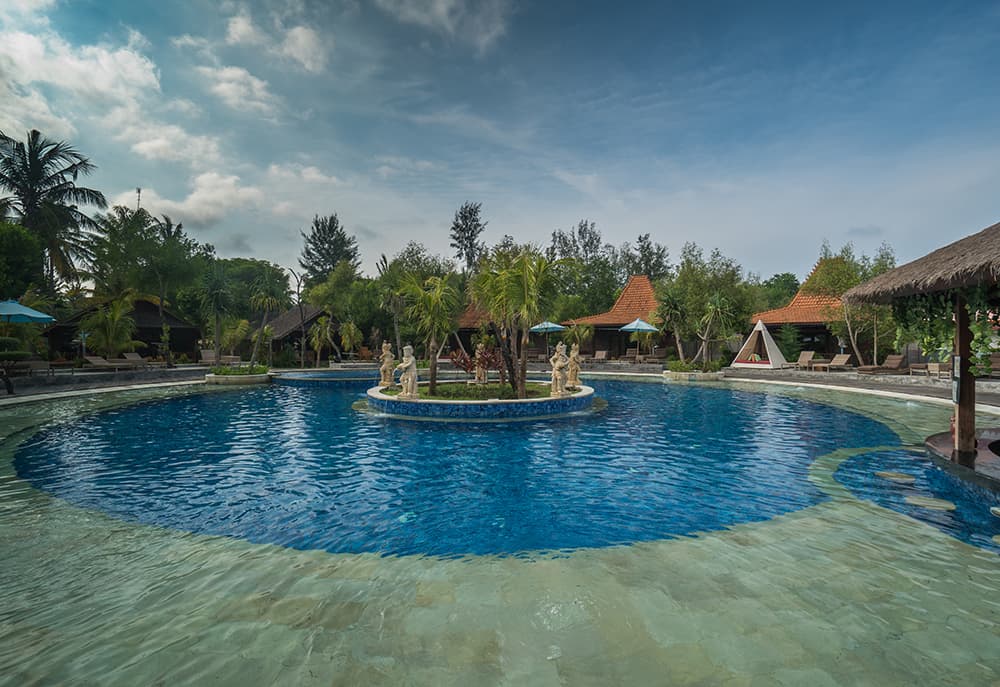
A swimming pool surround is three climates stacked on one slab. The water’s edge is permanently wet and chemically busy. A metre back, the surface is a wet-and-dry traffic lane for children who do not look where they put their feet. Further out, the same pour is a terrace for chairs, a path to the house, and a place someone will walk barefoot at two in the afternoon when the air is already in the forties.
Those jobs fight each other. A finish that is glassy enough to look like a hotel photograph will be hot and slippery. A finish that is aggressive enough to satisfy a nervous parent may be hard to clean and hard on skin. Salt chlorination adds a third argument: the surround is not just weathering in the air, it is being misted with a mild chemical that concrete and some metals do not love.
The standard that keeps coming up is AS 4586. The useful version is plainer than the clause numbers.
Slip resistance in language you can use
AS 4586 classifies new pedestrian surfaces for slip resistance. The test most often quoted on wet outdoor work is the wet pendulum: a weighted slider swings across a wet sample and the instrument reports how much grip that surface offered. The result is grouped into P ratings. In broad terms, a higher P is more slip-resistant when wet.
It is not a promise that a running child will never fall, and it does not measure heat or sunscreen staining. What a homeowner can usefully ask:
- Has this finish been tested wet, or are we looking at a dry indoor number?
- Is the rating for the actual surface — the broom, the exposed aggregate, the honed sample — or for a cousin in a brochure?
- Where is the wettest traffic? The coping, the step into the water, the run from the pool to the house door?
A pool surround that is wet by design generally wants a wet-pendulum result in the higher outdoor range. A honed, tightly sealed slab that was specified because it photographed like stone may sit well below that. If someone is selling you “the look of polished concrete” next to a pool, ask them which test they mean.
Grip is a property of a wet surface. Heat is a property of colour and sun. Do not let one specification stand in for the other.
Coping is not the deck
Coping is the edge that meets the water. It takes a wet foot, a hand, a lot of splash, and the chemistry that concentrates as water evaporates. The deck is the field behind it. It takes furniture, toys, and the fall that gets water away from the house.
Mixing the two into one continuous trowel is a common way to get a pretty photograph and a bad edge. The coping often wants a slightly different profile — a bullnose or a small fall back to the pool or to a drain — and a texture you can hold with a wet heel. The deck wants joints, a fall to a grate, and a finish you can live with under a table.
They can be the same material. They can even be the same pour, if the detailing is honest. They should not be specified as “just continue the patio”. A coastal patio already has salt and UV to deal with. Add a pool and you have a wet edge that never really dries.
Isolation matters here too. A concrete pool shell and a concrete deck are not the same structure. They move differently as the ground moves and as the water level and temperature change. A joint at the coping line, properly sealed and able to be renewed, is not a defect. A hairline that appears later because nobody provided that joint is.
Heat underfoot is a use test
Australian pool decks fail the February test more often than they fail a laboratory slider. Dark oxide, a dense trowel, and a western exposure will store heat and return it through the sole. Children notice first. Adults write it off as “just summer” until nobody sits on the northern edge.
Light colours reflect more sun. An open texture — a light broom, a modest exposed aggregate — has more surface area and a less continuous hot skin than a burnished dark slab. Shade from a tree or a sail helps, but trees have root and leaf arguments of their own, and a sail does not cover the coping.
If you want a dark colour because the water will look like a magazine, confine it to a vertical or to a narrow band, and keep the walking surface lighter. Sample panels should sit in the actual sun for a few days. Touch them at the hour the family swims.
Salt chlorination is weather you can taste
A salt-chlorinated pool is convenient. It is also a light saline mist on everything within splash range: the coping, the first metre of deck, the metal fence, the chair frames, the stainless fittings. Concrete is not immune. Salt sits in pores, keeps the surface damp, and will find any steel that is too close to the face.
Cover to reinforcement on a pool deck is not an indoor-slab number. Edges, rebates, and any grind that “tidies” a lip can steal cover. Once rust starts at an arris, the stain runs across the deck and the repair is never invisible.
Wash-down helps. A deck that cannot be washed — no tap, no fall, no drain — will hold salt until the next rain. Design for a hose. Design for the water from that hose to leave, not to pond against the house or run back into the pool as a sheet of dirt.
If the finish depends on a film, ask how that film behaves with salt water and sunscreen, and how you renew it without making the surface slippery.
Dark oxide is a colour, not a cooler
Integral oxide will not peel the way a paint will. It will still fade a little, and a dark dose will still get hot. A charcoal surround can look architectural at ten in the morning and unusable at two. A pale grey or a light earth stays usable longer and forgives splash. If the brief is “dark and smooth”, push back on at least one of those words.
Children, running lines and drainage
Children do not use a pool surround as a terrace. They use it as a wet corridor. The running line from the ladder to the back door, from the pool to the outdoor shower, from the deep end to the fridge, is the specification. That line wants:
- a consistent texture, not a surprise change from honed to glassy at the corner
- no unexpected step that a garden path would call a trip
- a fall that takes water to a drain rather than to a puddle at the door
- an edge that can be seen — a change of colour or texture at a step, not a single dark plane
Drainage is safety as well as durability. Standing water is a slip. It is also a way to keep salt on the surface. Grates should be cleanable. Joints should not be designed as little canals that hold water against a toe.
Broom, exposed, honed
Three faces
Three common faces, three different bargains.
Broom is the least fashionable and often the most honest. A light, even broom gives wet grip, hides a certain amount of staining, and can be repaired in kind if a bay is recast. A heavy broom can be harsh on skin and can hold dirt in the ridges. Specify the broom as a sample, not as a word.
Exposed aggregate puts stone in charge of the texture. The grip is usually good if the exposure is even and the stone is not polished by later sealing. Heat depends on the stone colour as much as the paste. A pale granite or a light local stone is a different deck from a dark river gravel. Joints still have to be right; the aggregate will not hide a structural crack, it will only camouflage it until someone trips.
Honed is the finish people want when they have seen a hotel. Honing lowers the profile and can lower the slip resistance, especially if it is then sealed to a sheen. It shows rust rings and leaf tannin. It can be beautiful in a sheltered, lightly used court. Next to a family pool it needs a wet test, a heat test, and a maintenance conversation before it deserves a place on the drawing.
None of these finishes exempts you from joints, falls or cover. Materials and method is where the mix and the cure sit. The surround is where those decisions meet wet feet.
A brief that fits on one page
Write down who uses the pool, at what hour, and whether the water is salt-chlorinated. Separate coping from deck. Ask for a wet-pendulum result that matches the actual sample. Ask for a colour you can stand on in February. Ask how salt and sunscreen will be washed off, and where that water goes. Ask where the deck stops and the house begins.
The surround is not a frame for the water. It is the floor of a wet room with no roof. Specify it that way, and the photograph will still be there — after people have walked on it.
Questions this piece answers
What does a wet-pendulum rating actually tell me?
It is a laboratory measure of how much grip a wet surface offers to a standardised slider. Higher P ratings mean more slip resistance in wet conditions. It is a classification of a surface, not a guarantee that nobody will fall, and it does not measure heat or salt staining.
Why do dark oxide pool decks get so hot?
Dark colours absorb more of the sun. A tightly finished dark slab can be painful by early afternoon, especially in inland heat or on an unshaded western edge. Light colours and a more open texture usually stay more usable, even if they show more splash marks.
Should the coping and the deck be the same finish?
They can share a colour family, but they do not share the same job. Coping takes a wet foot at the waterline and a lot of chemistry. The deck takes furniture, running children and a fall to a drain. Specify each, then decide whether they should match.
Keep reading in this hub
- Landscape retaining walls in concrete
A landscape retaining wall is a structure that holds soil, water and often a driveway surcharge — not a vertical finish. Height, drainage behind the wall, and whether an engineer is required matter more than the face. This briefing compares sleeper, block and poured concrete, and the roots and loads that rewrite an undrained wall.
- Paths, steps and level changes in the Australian garden
Garden paths fail as circulation long before they fail as photographs. Trip geometry, landings, lighting and tree roots decide whether a level change is a stair or a hazard. This is a plain-language briefing on NCC ideas, permeable versus slab paths, and routes that can take a pram or a wheelchair — not legal advice.
- Concrete outdoor kitchens and barbecue islands
An outdoor kitchen is a piece of climate, not a cabinet with a grill dropped in. Mass, hygiene, heat from the barbecue, and the services that feed gas, water and power all have to live with a slab that will move. Sealers that work indoors fail faster outside, and grease is a briefing item, not a surprise.