Materials and method · 4 December 2024
Briefing a concrete contractor — samples and hold points
Good concrete is commissioned, not hoped for. This essay sets out a written brief, sample panels, hold points, weather call-offs and payment stages, plus the photographs this journal expects a reader to keep before anyone books a truck for the job.
By Elise Hart, Editor · Updated 10 April 2026
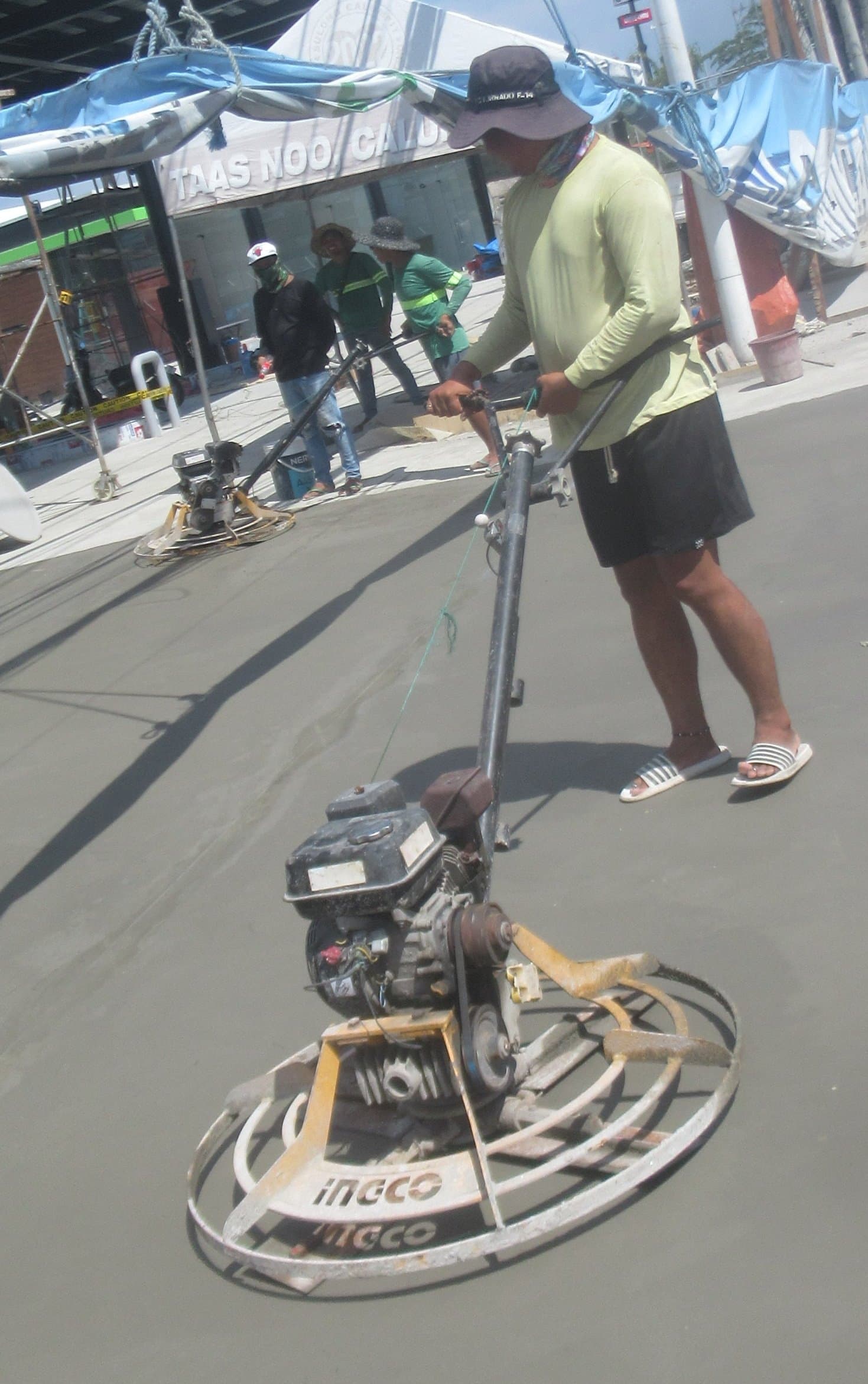
Custom concrete is commissioned the way a piece of joinery is commissioned: in writing, with a sample, and with moments when someone is allowed to say stop. The opposite method is common and expensive. A photograph is forwarded, a price is given on the phone, a truck arrives on a windy day, and the sealer is a conversation held while the slab is still bleeding.
This journal exists partly to make the first method feel ordinary. We are not a contractor and we do not certify work. We do expect readers to brief as if the face will be looked at for twenty years, because it will. The materials essays in this hub are the substance. This piece is the sequence.
A written brief, not a mood
A useful brief can be two pages. It should be dull enough to quote.
Name the element — driveway, courtyard, house slab, wall, stair, bench — and the finish in verbs: trowel, broom, hone, expose, board-form. Name the edges, the falls, the joints, and the meeting with anything that already exists. Name the constraints that are not aesthetic: a clay site, a balcony load, a first-floor pour, a neighbour’s fence, a tree that is staying.
Then name the things contractors otherwise invent on the morning:
- mix intent — strength grade, any SCM or colour constraint, a ban on kerb water
- the sample that governs, by date and photograph
- cure method and who is on site for the first seventy-two hours
- sealer class, sheen, and whether a curing compound must be compatible with it
- who supplies and who applies
- access, protection of finished work, and where the washout goes
- the weather rule that allows a call-off
Attach the engineer’s drawing if there is one. Attach the standard conversation if the element is a structure or a residential pavement: who designed it, what will be inspected. Decorative ambition does not replace that paper.
A mood board can sit behind the brief. It cannot be the brief. Photographs of other people’s slabs, taken wet, in another climate, with another sand, are how Australia fills with disappointed courtyards.
If a sentence cannot be inspected, it is not a specification. “Architectural finish” cannot be inspected. “Board-form, 100 millimetre dressed boards, horizontal, pour join at slab edge” can.
Sample panels
The sample is the contract for colour and face. Everything else is commentary.
A sample should be the same mix, the same sand and stone, the same oxide, the same form face or trowel, the same cure family, and the same sealer. It should be large enough to include a joint if the job has joints, a tie hole if the job is a wall, a nosing if the job is a stair. It should be old enough to have dried. Freshly sealed samples are flattering and brief.
Look at the sample on the site. North light in winter is not a workshop fluoro. Take it inside if the work is inside. Wet it. Let it dry. Abuse it if it is a bench. Walk it if it is a floor.
Approve in writing, with a photograph dated. Reject in writing, with a reason that can be acted on — “too warm”, “joint too proud”, “bug holes larger than the panel we said we would accept”. A vague unhappiness after the pour is not a sample process. It is a fight.
Trial batches cost money. They cost less than a driveway. If the plant or the contractor will not sample, they are asking you to sample the job itself.
Hold points
Before the pour, after the join, at the cure
A hold point is a gate. Work does not pass until a named person has looked and said so. On a house job the list is short and non-negotiable if the face matters.
Before the pour. Formwork or the subgrade, falls, joints cut or formed, reinforcement and cover, embeds, services, the sample on site, the mix confirmation from the plant, the weather. This is the engineer’s inspection when the element is structural. It is also yours: photograph the steel with a tape in the frame.
Joints. After they are made, and before they are treated as invisible. A decorative saw-cut that misses the drawn line is easier to argue about on the day than after the sealer.
Cure. At the start — covers on, compound applied evenly, hessian wet — and at the end of the third day. Curing is where unsupervised jobs quietly fail.
Sealer. A trial on a corner or on the sample, after the slab is actually ready, not when the programme needs a photograph. Compatibility with the curing compound is a hold point of its own.
You can add others: a pre-grind inspection on a polished floor, a crane plan on a precast day, a colour check on the first truck. Do not add so many that nobody believes them. Three or four gates that are real beat a checklist that is a PDF in a glovebox.
The person who releases a hold point should not be only the person who wants to go home. On structural work that is the engineer or their inspector. On decorative work it can be you, the designer, or a contractor’s supervisor who is not also the person holding the trowel. Write the name.
Weather call-off
Australian decorative work is lost more often to pride than to rain. The brief should say that the contractor may call off — and that you may call off — when heat, wind, frost or a tropical cell make the finish they sampled impossible. Payment for a genuine call-off is a negotiation; it is cheaper than a slab you will grind.
Put numbers or plain tests in if you can: a forecast maximum, a drying wind you can feel, a night that will freeze a Saturday pour. Then trust the site at 6am over a forecast that was issued at 4pm the day before. Western Sydney and Adelaide have afternoons that were not in the app.
A call-off is not a personal failure. It is how a professional crew treats a material that is still chemistry.
Payment stages
Money is the only hold point some jobs understand. Align it with work you can see.
A pattern this journal respects:
- a modest deposit against the sample and the written brief
- a mobilisation or formwork stage when the site is actually ready
- a pour stage after the pre-pour hold point, not before
- a retention across the cure
- a sealer and completion stage after the trial and after you have walked the dry slab
Paying in one cheque on the morning of the pour transfers all the risk to the cure and the sealer, which is to say to you. Paying nothing until the end manufactures a desperate crew and a rushed film of acrylic.
Variations should be written. “While we are here” is how a broom finish becomes a burnished finish without a new sample. If the variation changes the mix, the joint or the sealer class, it is a new brief.
Photographs to keep
You are building a record for a material that will outlast the group chat.
Keep, in a single folder:
- the signed brief and the approved sample, wet and dry
- mix dockets and the plant’s blend note
- pre-pour photographs of steel, joints, edges, with a tape
- the first truck, the last truck, and the sky
- the cure in place — covers, hessian, compound — on day one and day three
- the sealer trial
- the finished work in morning and afternoon light, before anyone wets it for a photograph
- any crack or mark, dated, before it is touched
These pictures are how a later repair stays sane, and how a dispute stays factual. They are also how you remember what you approved, which is a kindness to your future self.
How this journal expects the work to be commissioned
We expect readers to treat concrete as a designed finish, not as a commodity that became regrettable. That means a brief, a sample, hold points, a weather rule, staged money, and a file of pictures. It means asking who owns the structural minimums before asking who owns the oxide. It means not inventing a brand conversation where a class of sealer or a named SCM blend would do.
If a contractor finds this sequence hostile, they may not be the contractor for a custom face. Plenty of good crews work this way already; they are relieved when a client can say what the joint is for. The sequence is not bureaucracy. It is how a pour becomes something you can live beside without rewriting it in your head every summer.
Commission slowly. Pour when the brief, the sample and the sky agree. Then leave the slab alone long enough to become concrete.
Questions this piece answers
What should a written concrete brief contain?
The element, the finish, the mix constraints, the sample that governs colour, the joints, the sealer class, the cure method, hold points, a weather call-off, and how payment meets those points. A mood board is not a brief.
What is a hold point on a house concrete job?
A named moment when work stops until someone looks — formwork and reinforcement before the pour, joints, the start of the cure, the sealer trial. If nothing is allowed to stop the job, you do not have hold points. You have a schedule.
When should I pay a decorative concrete contractor?
In stages that match work you can see: sample approval, mobilisation, a pour that has been inspected, a cure that was actually kept, and a sealer after a trial. Paying the last of it against a wet, freshly sealed photograph is how disputes begin.
Keep reading in this hub
- Low-carbon mixes, recycled aggregate and SCMs
A lower-carbon mix is a specification, not a colour. This essay looks at embodied carbon, the real availability of fly ash and slag in Australia, the limits of recycled aggregate on a decorative face, and the questions that separate a plant conversation from greenwash.
- AS 3600, AS 3727 and what homeowners actually need to know
Two Australian Standards govern most house concrete, and they are not interchangeable. This essay translates AS 3600 and AS 3727.1 into questions a homeowner can ask — certificates, engineers, decorative extras versus structural minimums — without pretending a journal article is legal advice.
- Repairing decorative concrete without making it worse
A decorative repair that announces itself is often worse than the original scar. This piece covers colour-match limits, crack types, spalls, overlay versus patch, and the case for documenting the damage before anyone touches the face — then leaving some of it alone.